
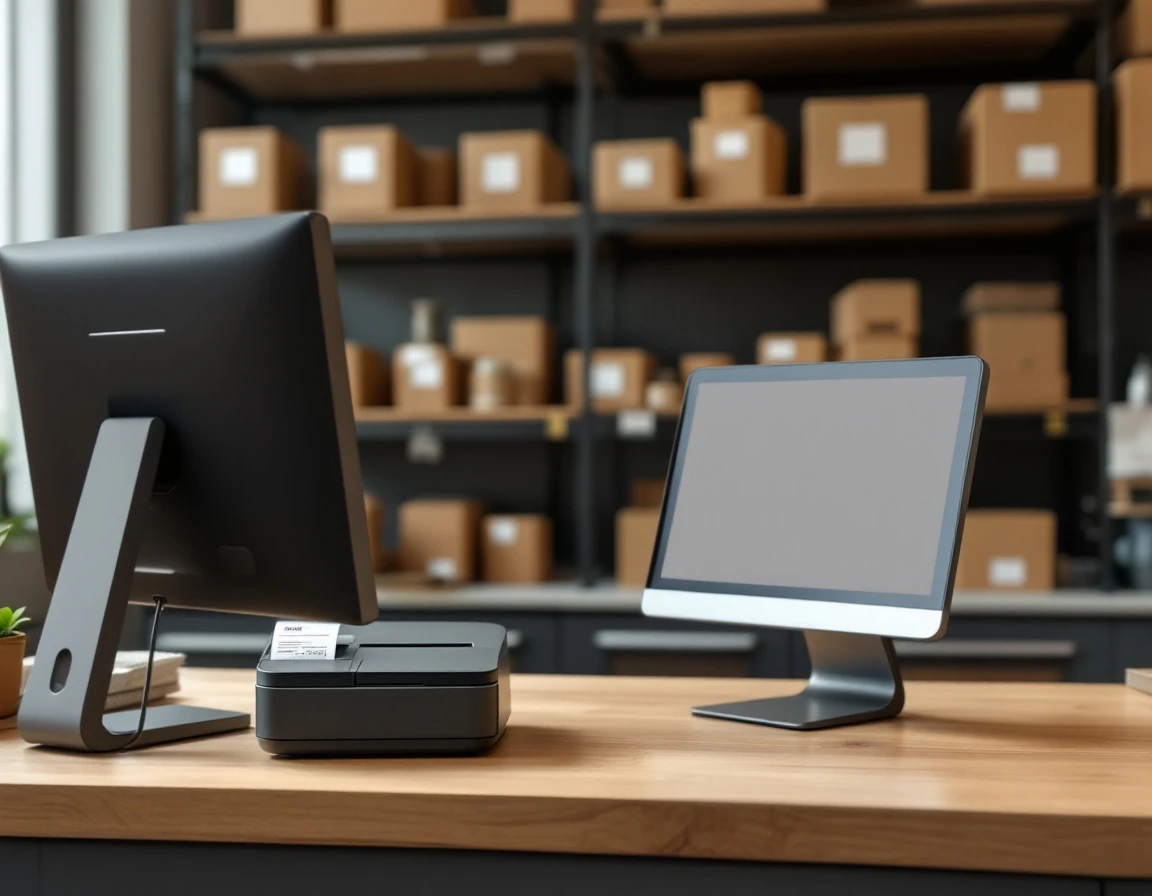
The Fragmentation Problem
Independent retailers typically juggle separate systems for sales, shipping, and inventory — creating operational gaps that slow transactions and complicate customer service. An omnichannel retail strategy for independent shops connects these disconnected systems into one unified platform, eliminating the manual workarounds that drain staff time and cost money during peak seasons.
Independent pack-and-ship and print shop owners
Independent pack-and-ship and print shop owners typically juggle three to five disconnected systems: a point-of-sale for counter transactions, shipping software for carrier labels, inventory management for stock tracking, and a separate customer database. Each system holds different information, requiring manual updates and constant cross-checking.
Inventory discrepancies between in-store and shipping channels create fulfillment errors and customer frustration when products show available online but aren’t actually in stock at the counter.
Manual workarounds drain staff time
During peak seasons like the June summer shipping surge, manual processes create bottlenecks that eat profit margins. Staff spend time copying data between systems, manually checking inventory across channels, and re-entering customer information for every transaction. Unified omnichannel systems eliminate these friction points by connecting POS, shipping, and inventory into one platform—reducing errors and freeing your team to serve customers instead of managing spreadsheets.
POS and Shipping Integration Fundamentals
Connecting your POS system to shipping operations means your team quotes rates accurately without leaving the transaction screen. When an employee rings up a package shipment, real-time carrier rate pulling displays USPS, UPS, and FedEx pricing instantly based on the package’s weight, dimensions, and destination. This eliminates the margin loss that occurs when staff quote shipping fees from memory or outdated rate cards, then discover the actual carrier cost exceeds what the customer paid.
Integrated payment processing captures all revenue streams—retail product sales, shipping services, print jobs, mailbox rentals—in one transaction ledger. Instead of reconciling separate terminals or manual cash logs at day’s end, every transaction flows into your accounting system automatically. Customer data moves bidirectionally: shipping orders sync to your POS loyalty database, building purchase history across services. While print job details from the POS auto-populate shipping label fields when that same customer needs to mail their printed materials.
Your carrier integration decision depends on your service mix. If 80 percent of your shipments go through USPS, prioritize direct USPS integration for the fastest label generation. When you serve customers who comparison-shop across carriers, a multi-carrier aggregator like ParcelPuffin pulls rates from all major carriers through one connection. The workflow becomes simple: customer presents package → employee scans SKU → system loads customer history and displays carrier rates → employee selects carrier, prints label, processes payment → transaction syncs to accounting. Review our integration guides to map your specific carrier needs to the right technical approach.
Unified Inventory Visibility Setup
Disconnected inventory systems create the dreaded “we thought we had it in stock” moment that sends customers out the door. When your POS tracks retail products, shipping supplies live in a spreadsheet, and print consumables sit uncounted in the back room, you’re operating blind. A unified inventory system builds a single source of truth where counts from point of sale, shipping operations, and print production all feed one database.
Start with a complete inventory audit. Map all three inventory types: retail products sold at the counter, shipping supplies like boxes and cushioning materials, and print consumables including paper and toner. Tag each SKU so staff see accurate stock levels by service line. For multi-location operators running two to five stores, real-time inventory sync prevents overselling when location A ships the last box of Priority Mail supplies before location B realizes stock hit zero. Omnichannel inventory management for print shops and pack-and-ship stores requires this real-time visibility across all locations and service lines.
Follow a 60-day implementation framework: Week 1 audit your current systems and identify gaps. Weeks 2-3 tag all SKUs across product categories. Weeks 4-8 sync your inventory platform and establish cycle counting workflows. Regular cycle counts catch shrinkage before it impacts your bottom line and prevent stockouts during peak shipping season when you can’t afford to turn customers away.

Staff Training and Summer Peak Readiness
Integration delivers value only when your team knows how to use it. If staff default to manual workarounds during busy periods, you lose the efficiency gains your unified system provides. Before June’s summer shipping peak, train employees on three core workflows: in-store transactions that combine retail products, print services, and shipping in one visit; shipping inquiry handling that lets staff look up rates and customer history without switching screens; and inventory restock protocols that trigger manager alerts when supplies run low.
Cross-training prevents bottlenecks when counter traffic spikes. Cashiers who understand basic shipping terminology can answer rate questions without calling for backup. Shipping specialists who know print capabilities can upsell lamination or binding services. This role fluidity keeps lines moving during peak hours.
Schedule training in phases: conduct train-the-trainer sessions in early May, roll out team training mid-May, and run a practice peak-scenario drill in late May with simulated high order volume. Assign clear ownership—one person handles POS, another manages shipping operations, a third oversees print jobs. Role clarity prevents confusion when June arrives and the counter fills with customers.
Quick Wins and 60-Day ROI Milestones
Implementation breaks into three phases that deliver measurable results before your summer peak begins. Each phase builds on the last, creating compound benefits when June volume arrives.
Phase 1 (Days 1-15): POS-Shipping Integration. Connect your point of sale to real-time carrier rate pulling. Before integration, staff quote rates by hand or default to one carrier—both approaches introduce errors. After integration, quotes pull live rates at the counter. Track cost per transaction and shipping quote accuracy before and after. Independent retailers typically see billing error rates drop measurably in the first two weeks. Staff spend less time looking up rates and more time serving the next customer.
Phase 2 (Days 15-30): Unified Inventory Visibility. Activate inventory sync across all channels. Implement cycle counting for high-turnover items—shipping boxes, packing tape, print paper. Measure discrepancies between expected and actual stock levels. Most stores catch shrinkage issues that were invisible before, reducing inventory loss measurably within the first month.
Phase 3 (Days 30-60): Customer Data Integration. Link purchase history across services. A customer who ships monthly and prints occasionally becomes visible as one relationship instead of two transactions. Track repeat visit rates and customer lifetime value. Stores typically see repeat customer visits improve measurably once unified profiles enable better service recognition.
Technology Selection and Next Steps: How to Implement Omnichannel Strategy in Retail
Vendor selection determines whether your team adopts the new system or quietly returns to manual workarounds. A poorly chosen POS forces staff to log into separate shipping software, check inventory in a third system, and reconcile payments across disconnected platforms — exactly the fragmentation you’re trying to eliminate. Apply three evaluation criteria before committing: Does the platform integrate USPS, UPS, FedEx, and every carrier your customers request? Can your existing team learn core workflows in days rather than weeks? Will it scale from one location to five without requiring a second migration?
Avoid the best-of-breed trap. Buying separate POS, separate shipping software, and separate inventory systems doesn’t unify operations — it fragments them further and creates new integration points that break during carrier updates or tax law changes. Independent retail stores using omnichannel best practices recognize that true integration requires a single vendor managing all systems as one cohesive whole.
ParcelPuffin was built specifically for pack-and-ship and print retailers, with native integration across all major carriers and built-in tools for shipping, print job pricing, and inventory tracking. Request demos that test your actual workflows: show the vendor a transaction combining mailbox renewal, print job, and multi-package shipment to verify their interface handles complexity without forcing staff into multiple screens.
Budget a six-week timeline: Week 1-2 for vendor evaluation, Week 3-4 for implementation setup, Week 5-6 for staff training. Go-live by late May positions you for June’s summer shipping peak. Schedule a demo to see how ParcelPuffin works for your store.