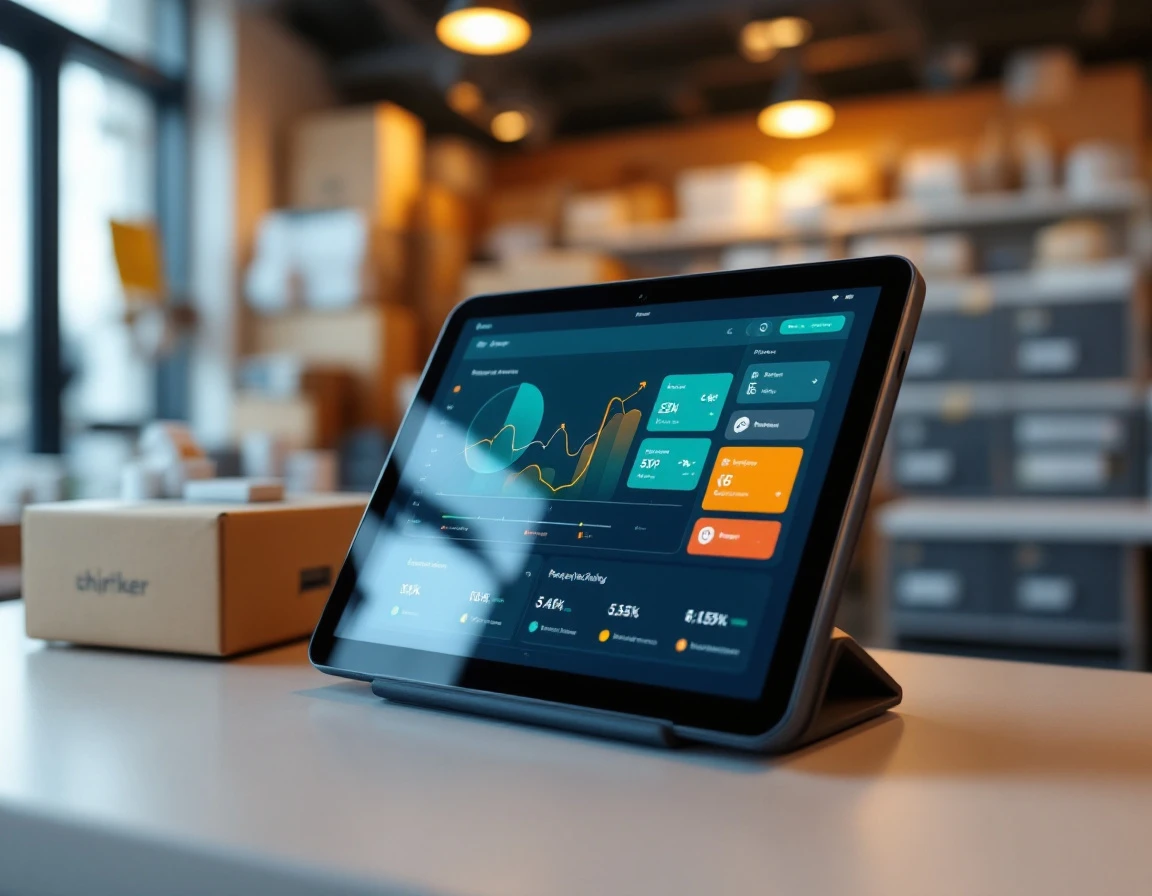

Why Generic POS Systems Drain Multi-Service Retailers
Running a multi-service store means handling shipping labels, print jobs, and mailbox rentals all in one day. But most generic POS systems charge the same payment processing fee for every transaction, treating a $5 mailbox renewal the same as a $50 shipping order. This one-size-fits-all approach ignores a critical reality: different transaction types carry different risk levels for payment processors, which means they qualify for different processing rates. Intelligent payment routing for retailers solves this problem by analyzing each transaction in real time to determine the lowest-cost processor.
Payment processing costs vary depending on what you’re selling. Mailbox rentals and shipping labels get charged differently because they carry different risk levels for payment processors. A low-risk recurring payment for mailbox rental qualifies for lower processing rates than a one-time shipping transaction. But generic POS systems treat them the same, routing both through the same processor at the same rate. Here’s what this costs in practice: A store processing 500 monthly transactions across shipping, printing, and mailbox services could be overpaying by $300-600 depending on current processing rates.
The math hits hard when your net margins run lean. Every percentage point of payment processing cost directly reduces profitability. Multi-service retailer payment processing solutions eliminate this waste by matching transaction types to specialized processors. When margins are thin, intelligent routing stops being a nice-to-have feature and becomes a financial necessity.
How Intelligent Payment Routing Works
Here’s how intelligent routing works in practice. When a customer pays for a USPS shipping label, the system recognizes it as a shipping transaction. It routes that payment to a processor optimized for shipping costs. A UPS shipment milliseconds later triggers different logic, routing to a different processor where carrier-specific transaction routing reduces per-transaction expenses compared to general payment processors.
The categorization happens automatically based on transaction type. A custom print order for business cards flows to a processor that specializes in custom manufacturing transactions and qualifies for lower processing rates than standard retail. When a mailbox rental customer pays their monthly fee, the system identifies the recurring billing pattern and routes to a processor where subscription-based pricing and optimized recurring billing infrastructure cut processing costs.
From your customer’s perspective, nothing changes. The payment terminal displays the same prompts, receipts look identical, and checkout takes the same speed. They swipe once, and the routing engine handles the rest. No additional authentication steps, no separate payment flows, no friction.
For you as a store operator, this means one less thing to worry about. You process hundreds of transactions daily without manual intervention. The system learns transaction patterns—recognizing that certain product codes indicate print services while others indicate mailbox services—and applies routing rules consistently across all payment channels, whether in-store, online, or mobile.
Transaction-Type Cost Comparison
The difference between generic POS processing and intelligent routing becomes clear when you examine actual transaction costs. Consider three common services: expedited shipping labels, large-scale print orders, and recurring mailbox rental services.
For shipping transactions, a standard system charges a combination of percentage-based and per-transaction fees. Intelligent routing reduces these costs by optimizing carrier selection between USPS and UPS, lowering your per-label expenses and delivering measurable savings on every shipment you process.
Print orders see similar patterns. Standard systems charge a percentage-based fee plus a fixed transaction cost, making them expensive for mid-sized orders. Routing identifies bulk or recurring customers and processes them through a lower-cost structure, reducing the overall fee burden and delivering savings with each transaction.
Mailbox rentals benefit most from intelligent routing. Recurring transaction processing reduces processing fees compared to standard payment rates, lowering the actual cost of mailbox rental services.
Across a typical monthly mix—250 shipping transactions, 100 print orders, and 150 mailbox payments—these per-transaction savings compound into measurable cost reduction. The gains vary depending on your specific business mix and processor partnerships. Annualized, even a modest monthly volume produces meaningful savings without changing how customers pay.
Real-World Savings Scenarios
A shipping-focused retailer processing $50,000 monthly in label sales pays approximately $1,450 in processing fees with a generic POS system at 2.9%. With intelligent routing matching shipping transactions to a carrier-optimized processor at 1.85%, monthly fees drop to $925, saving $525 per month or $6,300 annually.
A print-and-mail business splitting $30,000 in print orders and $20,000 in shipping through standard POS channels pays $1,450 monthly. Routing print jobs to a lower-cost processor at 2.4% and shipping labels at 1.85% reduces fees to $1,090, delivering $360 monthly savings or $4,320 per year.
A multi-service center balancing shipping labels, print jobs, and mailbox rentals across $60,000 in monthly volume pays $1,740 under uniform pricing. Intelligent routing assigns each transaction type to its best processor, cutting fees to $990 and banking $750 monthly or $9,000 annually. These savings flow directly to net margin without raising customer prices or reducing service quality.
ParcelPuffin’s Unified Payment Processing for Shipping Retailers
Generic POS systems treat payment processing as a separate module, requiring retailers to configure routing logic through third-party plugins or middleware. Because ParcelPuffin was built for multi-service stores that handle shipping labels, print jobs. And mailbox rentals. Payment optimization isn’t a separate add-on—it’s built into how the platform works from the start.
Here’s the practical difference. When a customer pays for a FedEx shipment at a ParcelPuffin terminal, you don’t configure anything. The system already knows the carrier, service type, package weight, and destination from when you created the label. It uses that information to route the payment to the most cost-effective processor automatically. No manual setup required. The same holds true for recurring mailbox payments and custom print orders—each transaction type flows to its best processor based on built-in business logic.
For your store, this means one integrated system handling shipping, printing, mailbox services, and payments together. You don’t juggle separate databases or worry about payment data getting out of sync. Rather than maintaining multiple systems and trying to sync payment data across all of them, ParcelPuffin routes every transaction from the first card swipe. You avoid purchasing additional software licenses for routing middleware, skip complex integration projects, and eliminate ongoing maintenance of custom routing configurations.
The cost advantage compounds over time. Setup takes hours instead of weeks, and there’s no recurring licensing fee for routing software. ParcelPuffin’s core features include intelligent payment routing as a baseline capability, and the pricing model reflects this—one platform fee covers shipping, printing, mailbox management, and optimized payment processing without per-module charges.
ROI Calculator and Implementation Path
To estimate your savings, follow these three steps:
- Calculate your monthly shipping transaction fees at current rates, then recalculate at 1.85% optimized rates
- Do the same for print jobs at 2.4%
- Apply recurring rates to mailbox rentals
The difference is your annual savings potential. By evaluating your shipping labels, print orders, and mailbox payments through this lens, you can identify recoverable fees hidden in your credit card processing costs and retail operations.
Implementation takes 2-4 weeks with zero transaction downtime. ParcelPuffin’s migration support handles processor account setup, PCI compliance validation, and staff training. The platform works with established payment processors across all US regions so you maintain existing banking relationships while adding routing intelligence.
Most multi-service retailers see the platform pay for itself within 3-6 months through processing savings. If you’d like to see how this plays out with your specific mix of shipping, printing, and mailbox transactions, we’re happy to walk through the numbers. Request a demo to see live routing logic applied to your actual transaction mix, review processor partnerships available in your area, and confirm compatibility with your current hardware and integrations.
Want to see how this works for your store? Schedule a demo and we’ll model your actual transaction mix to show where you can cut costs without changing how customers pay.