
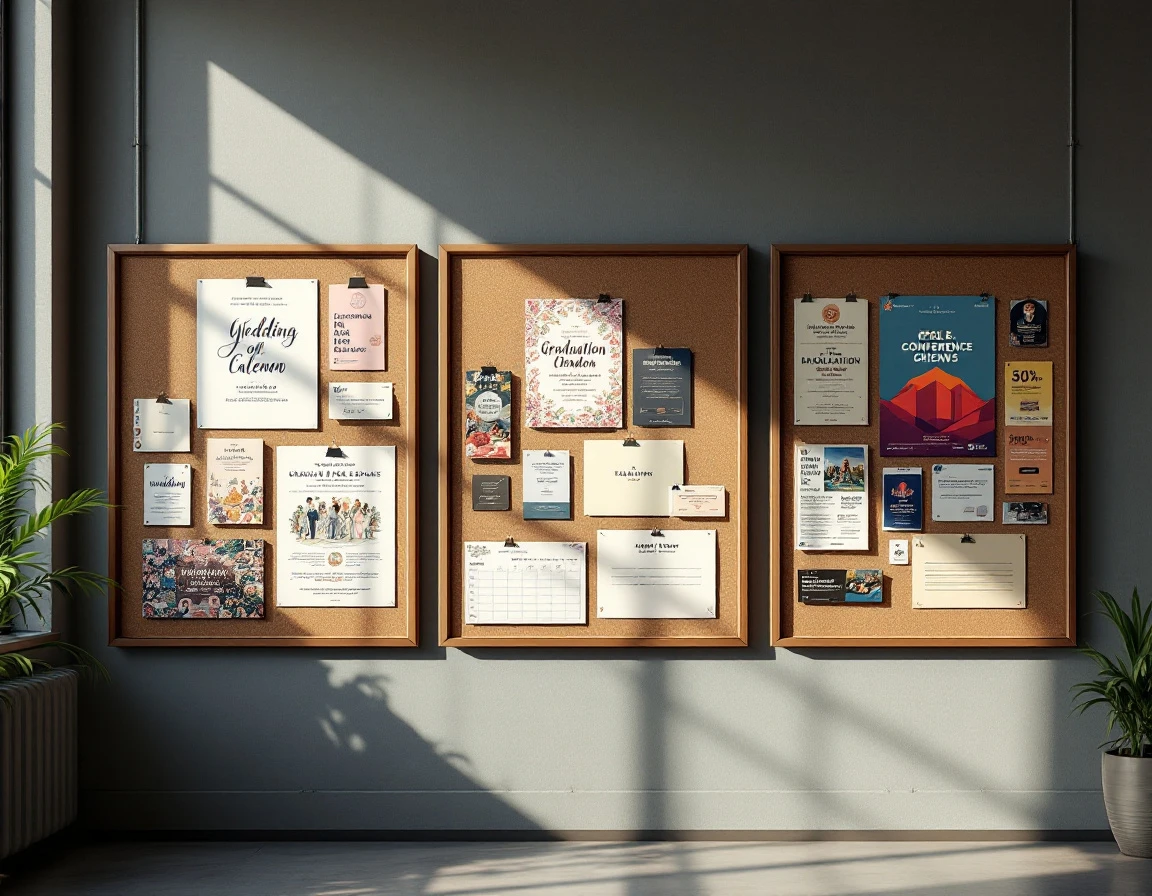
Why Event Cycles Drive Flyer Demand
Local businesses order flyers when they have something to promote. Weddings, graduations, and trade shows create predictable peaks in printing demand because customers need materials weeks before their events happen. Mastering event flyer marketing for print shops means publishing content that reaches customers during these seasonal windows, before they realize they need professional printing services.
Weddings, graduations, and trade
Wedding season peaks between April and June, graduation announcements surge in May, and trade show preparation kicks into high gear in January and August. Each event cycle brings a wave of customers who need invitations, programs, banners, and promotional materials—often on tight timelines. Print shops that publish how-to guides and planning timelines 60 to 90 days before these peaks appear in local search results exactly when customers start their research phase.
Publishing a wedding invitation design guide in March or a trade show banner planning article in November positions your shop as the expert before customers compare prices. Educational content builds trust early, and when customers are ready to order, they’re more likely to return to the shop that already helped them plan.
Customers search for flyer guidance months before they realize they need professional printing
The gap between initial research and final purchase tells an important story for print shops. A couple planning a May wedding starts browsing invitation styles in January. A nonprofit organizing a September fundraiser begins exploring flyer designs in June. During these early research phases, customers rarely think about print specifications or turnaround times—they’re focused on design ideas, event timelines, and planning checklists.
Print shops that publish content-first educational resources during these research windows capture attention before competitors enter the conversation. A blog post titled “Wedding Invitation Timeline: When to Order, Proof, and Mail” published in February positions your shop as a trusted resource months before the couple contacts any printer.
Content-first positioning captures 30–40% more event-driven orders than reactive sales tactics because it builds familiarity and trust during the planning phase rather than competing on price during the buying phase.
Three Seasonal Events & Content Windows for Event Flyer Marketing
Wedding flyer demand peaks between March and June. When engaged couples finalize details for spring and summer ceremonies. Print shops should publish educational content between January and March—exactly when couples transition from venue booking to vendor selection. Wedding size and quantity guides convert best during this window, helping couples calculate invitation counts, program quantities, and table signage needs before they contact printers.
Graduation flyer orders spike from April through June as schools finalize commencement details and graduates plan celebration events. Content windows open in February and April, when families begin researching announcement formats and timeline requirements. Turnaround checklists perform well here—a post explaining the six-week production calendar for custom announcements captures families before they commit to online-only vendors.
Trade show flyer inquiries arrive year-round, with strong peaks in January and August. January content targets businesses preparing for spring conferences, while August captures fall trade show planning. Case studies showing booth collateral timelines and material selection guides resonate with exhibitors who need coordinated print packages. These businesses value custom service and rush capabilities that online printers can’t match.
Regional timing matters. Summer festival season drives flyer demand in tourism-heavy areas, while agricultural regions see peaks around harvest festivals and county fairs. Check Google Trends data for your metro area and review your POS records from the previous year to identify local cycles. Automating these publish dates into a content calendar removes the annual scramble to plan topics. Schedule your wedding guides for February 1, graduation posts for March 15, and trade show prep articles for December and July. When customers search during decision windows, your shop appears as the local expert who understands their timeline.
Content Formats That Convert Readers to Orders
The content formats that convert best are the ones that answer customer questions before they need to pick up the phone. Sizing and quantity guides address the most common questions print shops hear: How many flyers do I need for 150 wedding guests? What’s the standard size for a graduation announcement? A post titled “Wedding Flyer Sizing and Quantity Checklist” that walks through guest count formulas and standard dimensions (5×7 for save-the-dates, 4×6 for reception cards) can embed a direct call to action like “Request a Quote for Your Wedding Materials” at the end. Readers who find these guides through search already have intent — they’re planning an event and researching print specs.
Timeline checklists reduce customer anxiety and position your shop as organized and trustworthy. A “12-Week Graduation Announcement Planning Guide” that breaks down design deadlines, proof approval windows, and mailing dates gives families a clear roadmap. When you include specific turnaround claims — “We deliver finished announcements within 48 hours of proof approval” — you address speed concerns before they become objections. These posts work because they mirror how customers actually plan: they need structure, and they want to know the printer understands their timeline.
Case studies and testimonials prove your capability for specific event types. A short case study about printing 500 trade show flyers in three days, complete with booth photos and ROI metrics, shows potential customers you’ve handled their exact scenario. Embed a “Trade Show ROI Worksheet” as a downloadable PDF that positions your shop as a strategic partner, not just a vendor. Print-ready templates embedded in posts drive direct action — a clickable business card template or a downloadable brochure spec sheet turns readers into contacts.
Schedule these posts eight to ten weeks before peak demand. A wedding flyer guide published in March captures April and May brides who are finalizing their materials. Search engines need time to index and rank your content, and early publication gives you visibility when customers start researching.

Automating Your Seasonal Printing Demand Content Calendar
Moving from a solid seasonal content strategy to actual execution requires setting up your publishing schedule once and letting automation handle the rest. A print shop owner can batch-create all wedding, graduation, and trade show content during January or Q1—when order volume is lighter—and use a free or low-cost scheduling tool to queue posts for publication on predetermined dates throughout the year. This approach turns content from a recurring monthly task into a one-time setup effort.
Here’s what a sample schedule looks like in practice:
- Four wedding-related posts published during weeks 5 through 8 of the year to capture spring demand
- Three graduation posts released during weeks 13 through 17 when families begin planning ceremonies
- Two trade show posts published during weeks 1–2 and 31–33 to align with major industry event cycles
Tools like Buffer and CoSchedule allow you to load these posts into a calendar view, assign publish dates, and forget about them. The system handles publication automatically—no manual intervention required.
The real power comes from linking each post directly to your shop’s contact forms and online quote tools. When a reader finishes an article about wedding invitation timelines, a clear call to action should guide them to request a quote or upload their design files. Modern POS systems can track which blog posts drive which orders by tagging inquiry sources, giving you data to refine your content year over year. If graduation posts convert better than wedding posts, you can shift resources accordingly.
This automation frees your staff to focus on what they do best: customer service and order fulfillment. Instead of scrambling to write a blog post during your busiest week, you’ve already published the content your customers need exactly when they need it. A/B test different content formats across events—compare how case studies perform against checklists, or how video tutorials drive conversions compared to written guides—and use your POS conversion data to double down on what works.
Measuring Results and Refining Your Event Flyer Marketing Strategy
Seasonal content works when you can prove which articles generate revenue. Start by connecting Google Analytics to your blog and quote form landing pages, tracking traffic by publication date and event type. Google Search Console shows which seasonal keywords rank and how many clicks each post earns. Cross-reference these dates with your POS order records to calculate actual revenue per article.
For example, a wedding flyer planning guide published in February might generate twelve qualified inquiries by mid-April. If those orders average $850 in print services—invitations, programs, signage, and thank-you cards—that single post produced $10,200 in revenue from a $200 content investment. Your POS system already tracks order dates and customer sources. Add a “How did you hear about us?” field to quote forms to connect inquiries directly to specific blog posts.
Track click-through rates on embedded CTAs like downloadable templates and quote request buttons. A trade show prep article featuring a banner template download that prompts readers to request quotes outperforms a generic case study in driving action. These patterns tell you which content formats resonate with each event audience.
Year two, your data shows which seasonal windows produce the highest return. Double publication frequency during peak-performing months and trim content that generates traffic but few orders. If graduation content drives less revenue than weddings despite similar traffic, shift resources accordingly. Analytics transform seasonal content from guesswork into a predictable growth channel, justifying the investment and enabling calculated expansion into new event categories.