
Why Print Shops Win Custom Orders Over Online Platforms
Pack-and-ship stores handling spring wedding season face predictable pressure: custom print orders with tight deadlines, variable quantities that change mid-production, and rush timelines that online competitors can’t match. Shops that capture this seasonal revenue understand one thing—personalized service beats template speed when customers need design consultation, hands-on material selection, and guaranteed delivery dates.
Online platforms compete on template speed
Online print-on-demand platforms deliver templates and fast turnaround for standard designs, making them appealing when timeline matters most. Customers upload artwork, select paper stock from preset options, and receive printed invitations within days. This convenience works well for projects with minimal customization needsds.
Your shop offers something fundamentally different: direct access to designers who guide material selection, suggest finishing techniques, and adjust layouts during in-person consultations. Customers review physical paper samples, test embossing depths, and compare foil stamping colors before committing to a print run. This hands-on collaboration creates invitations that reflect their vision rather than fitting templates designed for mass production.
Rush orders reveal your competitive advantage
Spring wedding season creates tight timelines that your shop handles better than online services. When a customer books their venue in March for a May wedding, they need invitations designed, approved, printed, and mailed within weeks. You offer same-week turnaround on custom orders, while online platforms require template selection, digital proofing cycles, production queues, and shipping time that can stretch to three weeks.
Wedding invitations demand a tactile experience that online proofs cannot provide. Paper weight, texture, envelope liners, and letterpress impressions require physical samples that customers can touch and compare before committing to their full order.
Customer Expectations for Custom Print Orders
The invitation designs customers request in 2024-2026 demand exactly what online template platforms cannot provide: hands-on material expertise, specialty printing techniques, and collaborative design refinement. Customers planning spring weddings are requesting sustainable paper stocks like cotton rag, handmade botanicals, and recycled fibers that require in-person evaluation of texture, weight, and opacity. Online services display these materials as digital thumbnails, but wedding invitations are tactile objects that guests handle and display. Your shop stocks physical samples customers can touch under different lighting conditions.
Letterpress printing has returned as the most requested premium technique, creating debossed impressions that online production facilities cannot replicate. This centuries-old method requires local craftspeople who set metal type, mix custom ink colors, and adjust pressure for each paper stock. Customers want letterpress borders framing watercolor florals, hand-drawn venue illustrations, and custom monograms that reflect their aesthetic rather than templated graphics.
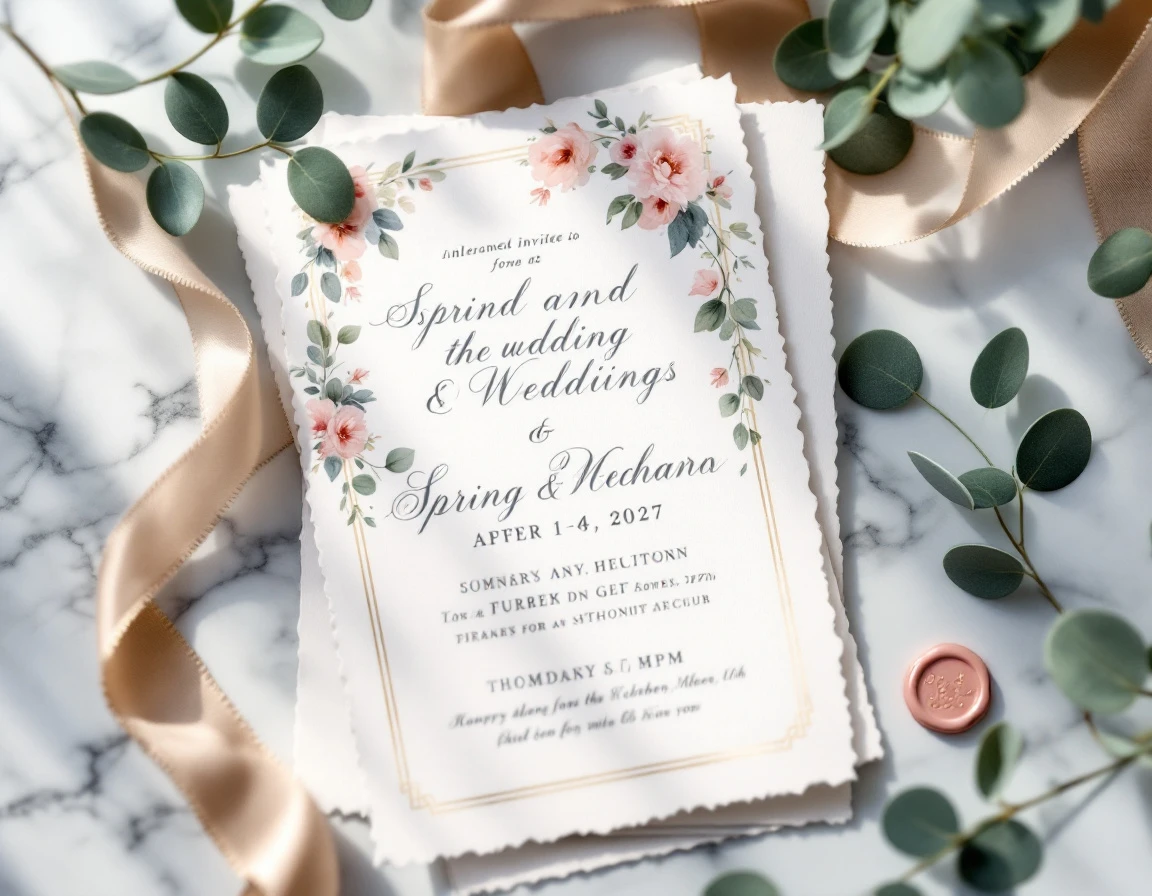
The trend toward mixed-media invitations combines digital printing with hand-applied elements: calligraphy addressing, wax seals, silk ribbons, and vellum overlays. Online services ship finished products in bulk; you coordinate these layered assembly steps and adjust materials based on what the customer selects during consultation appointments. When a customer requests foil-stamped gold monograms on navy card stock with blush envelope liners, you source coordinating materials and produce test prints before the full run.
Luxury finishing techniques define current expectations:
- Foil stamping
- Embossing
- Laser die-cutting
- Edge painting
These specialty processes require equipment investments and technical skill that commodity printers avoid. Your shop maintains relationships with finishing vendors, manages multi-step production timelines, and quality-checks each technique. The result is invitations that communicate design intention through physical craftsmanship, not digital convenience.
Service Capabilities That Differentiate Your Shop
Your shop provides material science expertise that online platforms cannot replicate. While online services offer template variations with standard cardstock, you guide customers through custom paper stock selection that includes weight comparisons (80lb vs. 130lb), finish options (matte, linen, pearl), color matching to their preferences, and specialty choices like watermarked paper or hand-torn deckle edges. Customers physically handle samples, feeling the difference between cotton fiber and bamboo paper, understanding how tactile quality shapes the recipient’s first impression.
Designer-led consultation transforms invitations into personalized pieces. You integrate customer stories into bespoke design elements — a couple who met at a botanical garden might incorporate custom botanical illustrations, while another might commission a monogram combining family crests. These conversations happen face-to-face, with designers sketching concepts and refining details through multiple iterations. Online services limit customization to uploading photos or selecting pre-designed motifs from dropdown menus.
Production flexibility enables customization impossible at industrial scale. You accommodate variable printing within single orders — printing 50 invitations with individual guest names in calligraphy, creating small batches with different wording for divorced-parent households, or adjusting quantities mid-production when guest lists change. Online platforms require standardized runs where every invitation matches exactly.
Luxury finishing options create unboxing experiences that announce the wedding’s tone. You apply letterpress printing that creates dimensional impressions. Foil stamping in rose gold or copper, blind embossing for monograms, and edge painting in custom colors. Customers select handmade paper with visible fiber inclusions or silk ribbon belly bands. These specialty materials and techniques require equipment, expertise, and small-batch production methods that online services cannot economically provide, making customization a structural advantage for your shop.

Managing Rush Orders During Peak Season
March through May represents peak inquiry season for spring weddings, when customers finalize guest counts, reception venues, and invitation timelines. Many discover they need invitations faster than originally planned—venue contracts arrive late, guest list revisions push back deadlines, or family circumstances shift the schedule. Online print-on-demand services operate on standardized production calendars that cannot compress during spring wedding season because they batch orders across thousands of customers and rely on external fulfillment centers with fixed processing windows.
You control your own production equipment and staff schedules, which allows you to negotiate rush timelines that online platforms simply cannot offer. A customer who finalizes their invitation design in late February can work directly with your production team to prioritize printing, cutting, and assembly—guaranteeing delivery before their March mailing deadline. That direct access to the people running the presses makes the difference between meeting a timeline and scrambling for alternatives.
Rush-order pricing from your shop reflects the real cost of rearranging production schedules, bringing in staff for weekend work, and prioritizing one customer’s job over standard-timeline orders. The premium pays for reliability and accountability—when you commit to a delivery date, your reputation depends on meeting it.
For customers planning spring weddings during this peak period, your shop provides a production partner who can adapt to compressed timelines rather than a vendor locked into inflexible processing schedules. ParcelPuffin helps you manage these rush orders by integrating production timelines with shipping label generation—so when you promise a delivery date, your system automatically calculates carrier options and prints shipping labels that guarantee arrival on time.
Design Consultation vs Template Selection
When a customer meets with your designer, the conversation starts with their vision, not a template library. A real design consultation explores their story, wedding theme, venue aesthetic, and the tone they want to set from the moment guests open the mailbox. Your designer translates these intangible elements into visual language—selecting typography that reflects formal elegance or garden-party ease, recommending color palettes that harmonize with their preferences, and confirming every design choice aligns with their broader wedding brand identity.
Online template platforms position customers as the designer. They browse predefined aesthetics, swap placeholder text for names and venue details, and adjust colors within preset limitations. Customization depth stops at surface-level edits. The template dictates layout, typography hierarchy, and design structure. If their vision doesn’t fit the template framework, they compromise or search for another option that still won’t quite match what they imagined.
Designer expertise prevents costly mistakes that customers often don’t recognize until invitations arrive. Overly trendy typography choices that feel dated within months. Color combinations that look vibrant on screen but print muddy or washed out. Legibility issues with script fonts rendered too small or decorative elements that overwhelm essential information. Your designer catches these problems during the proof stage, not after they’ve ordered two hundred invitations.
Material and finish recommendations extend design consultation beyond the screen. Your designer might suggest textured linen paper for a vineyard wedding, smooth cotton stock for modern minimalist designs, or kraft paper with letterpress printing for rustic outdoor celebrations. They pair paper weight with envelope style, recommend foil colors that complement the design rather than overpower it, and explain how letterpress impression depth affects readability. This material expertise transforms good design into invitations guests notice and keep.
How to Position Your Shop for Custom Orders
Customers searching for wedding invitation designers want proof of expertise before they walk through your door. Shops that win spring wedding business build visual portfolios that showcase recent custom work with the story behind each design. Instead of displaying only finished invitations, include photos that document the design process: initial concept sketches, paper sample selections, color matching sessions, and final production. Each portfolio piece should explain the customer’s vision, the design challenges you solved, and how material choices brought their story to life.
Case studies convert browsers into clients. Create before-and-after documentation that shows how designer consultation transformed initial ideas into a cohesive invitation suite. Photograph the first meeting materials, mock-ups with revisions, and the final printed pieces. Explain specific decisions like why you recommended letterpress over digital printing for their botanical motif, or how hand-applied silk ribbons improved their vintage aesthetic. These case studies demonstrate your expertise in ways that generic portfolio images cannot.
Offer initial consultations that educate customers about their options. Whether in-person or virtual, use this meeting to show physical paper samples, explain printing technique differences, and discuss timeline considerations for their wedding date. This consultation positions you as a trusted advisor who helps customers understand what’s possible within their budget and schedule.
Optimize your Google Business Profile with photos of your design workspace, sample materials, and recent custom projects. Update your profile with posts about current wedding trends and seasonal design ideas. Use location-specific keywords in your business description so you appear when customers search for “professional wedding invitation designer near me” or “custom invitation printing” in your area. Local SEO puts your expertise in front of high-intent searchers actively planning their spring weddings. ParcelPuffin’s integrated marketing tools help you track which keywords drive phone calls and walk-ins, so you know which promotions convert browsers into booked consultations.