

The Multi-Platform Billing Error Crisis
When you ring up a customer who ships a package, buys mailbox rental for three months, and needs two documents notarized, the transaction touches three separate systems in most pack-and-ship stores. An integrated payment processing for retail POS system would consolidate these interactions, but most stores still rely on disconnected workflows. The shipping label gets created in carrier software. The mailbox rental goes into a spreadsheet or dedicated mailbox management tool. The notary fee gets recorded in a compliance logbook. Then someone has to manually total these charges and enter the final amount into the payment terminal.
This disconnected workflow creates predictable billing errors. A staff member enters a shipping charge but forgets to add the notary fee before processing the card. Or they charge for a mailbox rental but the renewal doesn’t sync to the accounting system, so the customer gets billed again at the next renewal cycle. Each platform holds part of the transaction record, but no single system shows the complete picture.
The real cost isn’t just the occasional overcharge that requires a refund. It’s the hours spent each week cross-referencing transaction logs, reconciling payment batches against service records, and investigating discrepancies between what the card processor reports and what actually happened at the counter. One mismatched entry can require reviewing security footage and interviewing staff to reconstruct what the customer actually purchased.
How Integrated Payment Processing for Retail POS Prevents Errors
When shipping, print, mailbox, and notary transactions all flow through the same payment system. Each service creates a single transaction record that includes the customer profile, tax calculation, and payment details. This eliminates the manual data entry that causes duplicate charges and reconciliation errors in stores running separate systems for each service line. An all-in-one payment processing system designed for shipping and services eliminates this fragmentation.
Consider a common scenario: a customer ships a package and renews their mailbox rental at the same counter visit. In a fragmented system, the shipping charge processes through one platform while the mailbox renewal posts to a separate database. If the mailbox system doesn’t sync back to the shipping platform, the customer’s credit card may get charged twice for the shipping fee because the unified transaction history doesn’t exist. A unified payment system records both services in one transaction, applying the payment once and updating all service modules simultaneously.
Tax calculation errors follow a similar pattern across service types. A customer who orders custom prints and needs two documents notarized might see incorrect tax applied if the print module calculates sales tax while the notary module references an outdated tax table. Unified customer profiles within integrated POS payment processing systems prevent this by maintaining consistent address details, tax jurisdiction, and contact information whether the transaction involves dimensional weight calculations for a FedEx shipment or fee structures for certified mail with tracking.
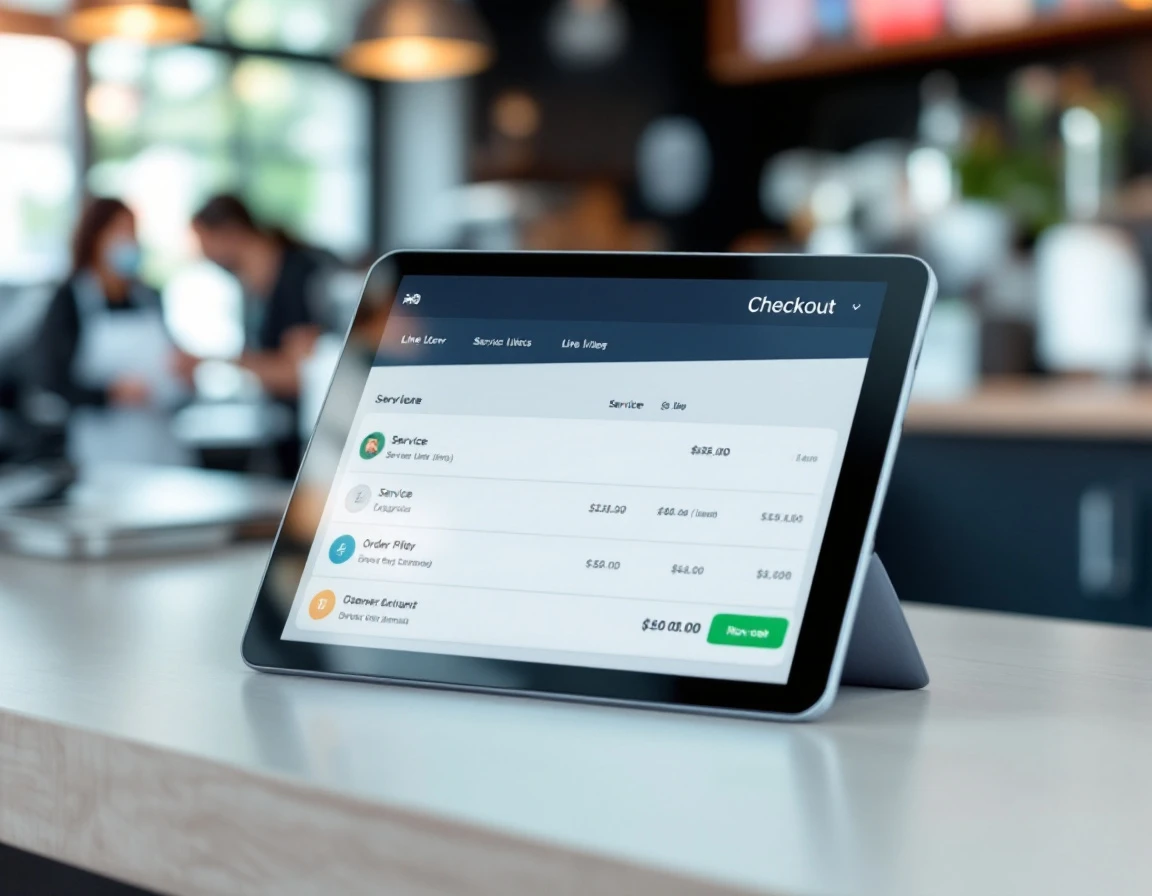
Real-time dashboards surface these cross-service transactions as they happen, showing staff exactly which services were rendered, how much was charged, and which carrier or vendor was involved. This visibility eliminates the need to export reports from multiple systems, compare line items in spreadsheets, and chase down discrepancies days after the transaction.
Error Prevention by Service Type
Different service lines create different billing vulnerabilities when managed through disconnected systems. Understanding where errors occur helps stores identify which operational gaps cost them the most time and money. A best POS system for multiple service types addresses each vulnerability simultaneously.
Shipping: Carrier Rate Syncing and Dimensional Weight Automation
Carrier rate tables update multiple times per year, and dimensional weight rules vary between USPS, UPS, and FedEx. When a customer’s package dimensions trigger dimensional weight pricing, separate systems sometimes calculate fees using outdated rate data or fail to apply the correct carrier’s formula. An integrated platform pulls current rate tables directly from carrier APIs and calculates dimensional weight automatically based on which carrier the customer selects. This prevents the scenario where a staff member quotes one price at the counter, but the actual carrier charge comes back higher because the system didn’t account for dimensional weight or applied last year’s zone pricing.
Print: Job Tracking and Material Cost Allocation
Custom print jobs involve variable pricing across paper stock, color versus black-and-white, binding options, and rush fees. Stores using separate systems for estimating and billing often apply rush fee markups incorrectly when a customer upgrades materials mid-job. Integrated job tracking maintains a single record from quote to completion, applying material upgrades and rush fees to the correct base price. When a customer adds lamination or switches to cardstock after the initial quote, the system recalculates the total using current material costs rather than requiring manual price adjustment that introduces calculation errors.
Mailbox Rentals and Notary Services
Recurring mailbox rental charges create duplicate billing when renewal dates coincide with manual adjustments for key deposits or address changes. A unified customer account prevents double-posting by tracking which charges have already processed. For notary services, state fee regulations determine maximum allowable charges per signature and document type. Integrated compliance tracking applies correct notary fees based on current state regulations and automatically calculates required taxes, preventing overcharges that trigger customer disputes and potential regulatory issues.
Reconciliation and Admin Time Savings
Manual reconciliation drains operational capacity. A store manager currently dedicating eight hours weekly to cross-reference shipping charges, print job invoices, and mailbox billing across separate systems can redirect that time to customer service or business development when automated daily reconciliation handles the work.
Integrated systems flag discrepancies in real time rather than surfacing them during weekly manual audits. When a shipping label charge doesn’t match the carrier invoice, the system alerts staff immediately instead of waiting for month-end discovery. This immediate visibility prevents revenue leakage and eliminates the customer disputes that arise from delayed billing corrections.
Real-time revenue tracking across shipping, print, mailbox, and notary services gives managers accurate cash flow data without compiling reports from multiple platforms. Staff spend less time investigating billing errors and more time serving customers. Choosing a best POS system for multiple service types means fewer refunds and chargebacks that tie up working capital.
Cost-Benefit Framework for Consolidation
Before committing to a unified payment system. Calculate what fragmentation actually costs your business. Start with error correction time: if your manager spends six hours weekly investigating billing discrepancies across shipping, print, mailbox, and notary transactions, that’s 312 hours annually. At $25 per hour, error correction alone costs $7,800 per year in labor that produces no revenue.
Separate platforms for shipping labels, print job management, mailbox tracking, and payment processing each carry their own recurring costs. A business relying on three disconnected systems incurs higher expenses than consolidating into an integrated platform—but the integrated system eliminates duplicate data entry and the reconciliation burden that fragments your team’s time.
Payment processing fees add another variable. Fragmented merchant accounts often mean higher per-transaction rates because your total volume splits across multiple processors. Consolidating to a single merchant account can reduce processing costs when your combined transaction volume qualifies for lower rate tiers.
The breakeven calculation becomes clear when you add these costs. A business that simplifies reconciliation processes recovers meaningful staff time through automation. When an integrated system costs modestly more than your current fragmented approach but reduces billing errors and eliminates duplicate subscriptions, you achieve positive ROI within months. Mid-2026 provides a natural checkpoint to evaluate performance and plan H2 technology upgrades.

Evaluation Checklist for Your Business
Before scheduling demos or evaluating vendors, assess whether your current systems create billing friction. Ask yourself: How many billing disputes does your team resolve each month? If you’re fielding customer questions about why a shipping charge doesn’t match the label, or why a notary fee appeared twice, your systems aren’t syncing properly. Track the percentage of revenue tied up in error correction — both the direct cost of refunds and the staff time spent investigating discrepancies.
Next, evaluate your software stack by considering these key questions:
- Does your current POS handle shipping rate syncing, print job tracking, mailbox recurring fees. And notary compliance in one platform?
- Are you logging into separate systems to process different service types?
- Can you pull a unified revenue report across all four service types in under five minutes?
- Does that require exporting spreadsheets and manual cross-referencing?
If you’re logging into separate systems to process different service types, you’re creating data gaps that lead to billing errors. Test whether you can pull a unified revenue report across all four service types in under five minutes. If that requires exporting spreadsheets and manual cross-referencing, you’re spending valuable time on reconciliation that integrated POS payment processing systems automate.
This self-assessment reveals whether payment consolidation addresses real operational pain. Stores handling high volumes across multiple service types see the clearest benefit from unified transaction records and automated reconciliation.
Next Steps: Selecting and Implementing
Start by requesting demos from vendors that genuinely integrate shipping, print, mailbox, and notary services—not platforms that simply bolt separate modules together. Schedule a ParcelPuffin demo to see how unified transaction processing works across all four service types in a single interface.
Before switching platforms, audit your current transaction records to quantify exactly how many billing errors occur each month. Document specific examples: duplicate mailbox charges, incorrect print job tax calculations, or shipping rate mismatches. This baseline establishes clear metrics for measuring improvement after migration.
Plan your migration timeline around low-traffic periods. June 2026 represents an ideal decision point—implement during early summer before back-to-school shipping volume and fall peak season arrive. Run old and new systems in parallel for one to two weeks, allowing staff to verify that transactions record correctly across all service types. Train employees on unified workflows where one transaction captures shipping labels, print jobs, and notary fees without toggling between separate platforms.
Establish error monitoring dashboards immediately after launch. Track daily reconciliation time, customer dispute frequency, and transaction accuracy rates. Consolidation eliminates the root cause of billing errors—fragmented data entry—rather than just treating symptoms with manual fixes.