

The Bootstrap Reality: Why Capital Isn’t Required
Launching a label printing business requires minimal investment when you start small and scale through revenue. Learning how to bootstrap a print shop business means reversing conventional growth—securing customer orders first, then purchasing equipment with their deposits.
External funding creates debt obligations
Taking on business loans or investor capital forces early-stage print shops into monthly debt obligations before they’ve proven their revenue model. These fixed payments drain cash flow when you need flexibility most—during equipment setup, product testing, and initial customer acquisition.
Arpy Simonian launched his label printing business from a spare room with no startup capital by reversing the conventional growth playbook. Instead of securing funding to buy equipment and build inventory, he started with customer orders first, used their deposits to purchase materials, and reinvested early profits into a single piece of equipment at a time.
Lean operational model proves profitability
Arpy Simonian’s bootstrap approach confirms that label printing businesses can generate positive cash flow before purchasing specialized equipment or stocking inventory—proving profitability first, then investing in growth.
How to Start a Label Printing Business: Simonian’s Three-Phase Equipment Strategy
Simonian divided equipment acquisition into three distinct phases, each tied directly to cash-flow milestones rather than arbitrary timelines. This approach transformed equipment constraints from obstacles into strategic advantages that forced focus on high-margin work before expanding capacity.
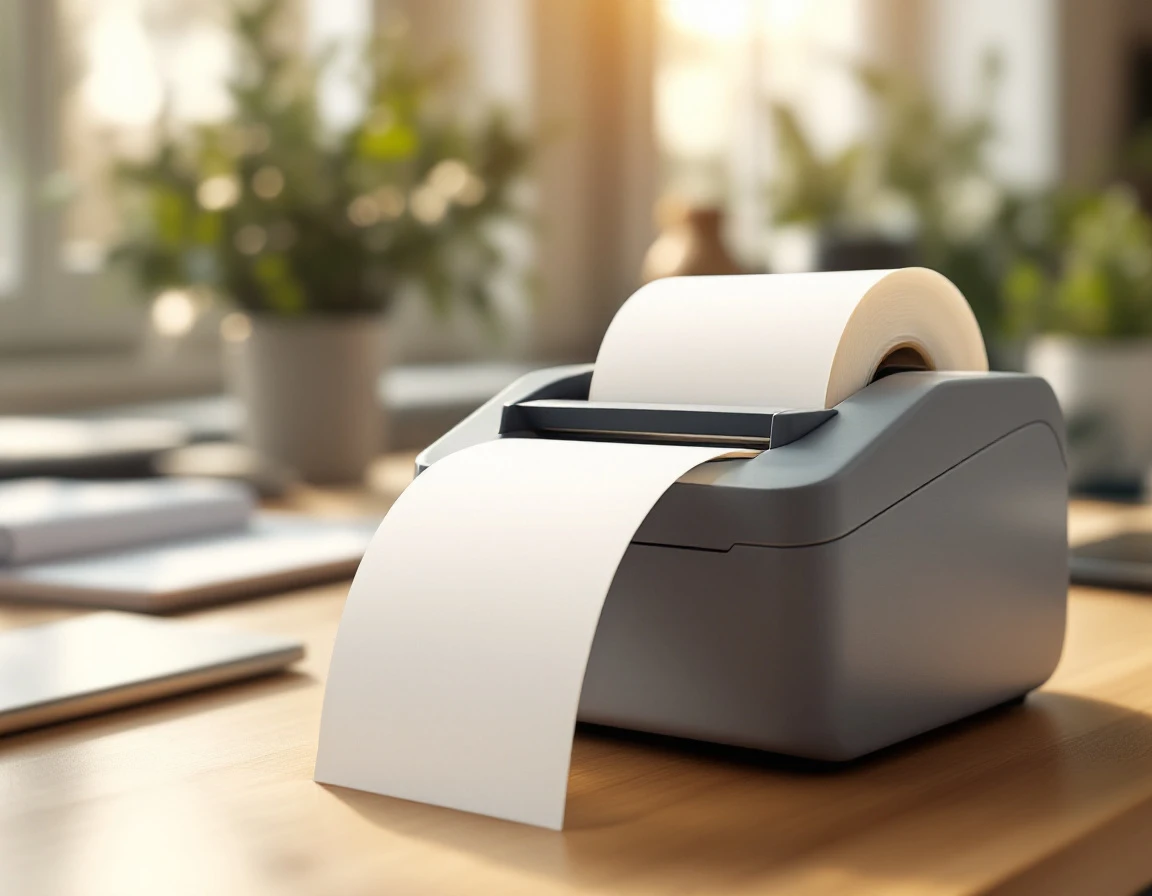
Phase 1 centered on second-hand and lease-to-own equipment to eliminate upfront capital requirements. Simonian sourced a used digital label press for roughly 60% less than new pricing and negotiated a lease-to-own arrangement on a finishing unit. This initial setup handled custom label orders—the highest-margin category in label printing—without requiring capital investment. The used equipment delivered identical output quality for specialty runs where turnaround speed mattered more than production volume.
Once monthly revenue reached consistent five-figure territory, Phase 2 introduced semi-automated equipment that increased throughput on repeat orders. Simonian upgraded to faster cutting and laminating equipment, purchasing refurbished units at 70% below new pricing. This upgrade specifically targeted the bottleneck in fulfilling bulk reorders from established accounts, where automation generated the fastest return on investment.
Phase 3 reserved production capacity expansion until cash flow stabilized with predictable accounts receivable cycles. Simonian reinvested 40-50% of quarterly profits into additional press capacity only after achieving six consecutive months of positive cash flow. This sequencing maintained each equipment purchase solved a revenue-limiting constraint rather than creating unused capacity that drains working capital.
Product-Market Fit: Why Labels First
Simonian chose label printing as his entry product for three mathematical reasons that stack profitability. Label printing delivers superior gross margins compared to business cards or general commercial printing, creating a structural advantage in the pricing model. This margin advantage compounds when you consider operational efficiency: labels require minimal floor space compared to large-format printing equipment, and the same desktop printer handles product labels, shipping labels, and bottle labels without specialized machinery for each category.
His customer acquisition method targeted local craft beverage makers and small-batch food producers through direct outreach. These customers represented a strategic advantage beyond their initial orders. CPG brands and e-commerce sellers operate on predictable reorder patterns — they need consistent label inventory as production scales, creating recurring revenue without constant sales effort. Larger print shops typically ignore these smaller accounts because setup costs eat into margins on short runs, leaving the niche wide open.
The May timing proved critical for another reason: summer product launches. Craft breweries releasing seasonal beverages and outdoor gear brands preparing for peak sales season need labels manufactured NOW for Q3 inventory. By capturing these orders in May, Simonian secured cash flow exactly when reinvestment decisions about equipment upgrades mattered most.
Customer Acquisition Without Marketing Budget
Simonian’s customer acquisition strategy required no advertising spend—just systematic direct outreach. He identified craft breweries, specialty food producers, and local e-commerce sellers who needed custom labels, then contacted them through phone calls, LinkedIn messages, and email. His pitch centered on solving a specific problem: offering faster turnaround and lower minimums than regional commercial printers who required 5,000-piece orders.
The numbers validate this approach. His first ten customers came from cold outreach, with the next eight arriving through referrals. Direct relationships with CPG makers and craft beverage producers generated seventy percent of early revenue. Proving that personal connections outperform paid marketing for niche B2B services. Each satisfied customer referred two to three others within their industry network, creating compound growth without acquisition costs.
Print shop owners can replicate this model immediately. This May, identify twenty local businesses that use labels—coffee roasters, sauce makers, candle companies, specialty pet food brands. Contact them with a sample offer: print fifty custom labels at cost to demonstrate quality and turnaround speed. These relationships create high-lifetime-value customers who reorder quarterly and refer other producers facing the same labeling challenges.
Cash-Flow Reinvestment: The 40-60 Rule
Simonian established a disciplined reinvestment framework from his first customer payment: 40% covered operating expenses (label stock, adhesives, equipment maintenance, part-time labor), while 60% funded strategic reinvestment. This ratio kept overhead lean during the volatile early months while accelerating capability expansion.
His month-by-month cash flow progression followed a predictable pattern. Initial revenue came from a small roster of craft beverage clients in the first month. By the third month, his customer base had expanded as early clients began reordering and referrals materialized. “…Within five months, he had cultivated a strong portfolio of active accounts. Operating costs stayed relatively fixed—label stock scaled with orders, but equipment lease payments and workspace costs remained constant whether he printed modest quantities or ran high-volume batches.
Reinvestment priorities followed equipment-first sequencing. Month four brought a faster cutter that reduced job turnaround from two days to one, unlocking rush-order premiums. Month six funded part-time help for order prep and quality checks, freeing Simonian to handle design consultations and customer acquisition. Marketing came third—only after production capacity could support new volume.
The result: positive cash flow by month seven. Still operating from his home workspace. This reinvestment discipline enabled the full-time transition in quarter three without outside capital. Proving that strategic revenue allocation beats external funding when building printing capacity incrementally.

Your May-to-August Bootstrapping Roadmap
May is your critical launch window because summer product launches are happening now—craft beverage makers, specialty food brands, and CPG companies are placing label orders for July and August production runs. Follow Simonian’s four-week sprint to secure your first customers before the summer selling season peaks. Starting a printing company on a budget during peak demand season maximizes your chances of landing repeat clients.
Week 1: Define your niche target (craft beverages, specialty foods, or health/beauty products) and source used label printing equipment. Focus on tabletop models priced 60-70% below new units. Set up your home workspace with proper ventilation and material storage.
Week 2: Run test production batches using sample label stock. Contact your first twenty potential customers—local producers who currently order labels from online services or regional printers.
Week 3: Follow up with qualified leads and offer sample label runs at cost. Close your first five customers with standard turnaround terms.
Week 4: Process initial orders and collect payment immediately upon delivery.
June and July shift to operational excellence: optimize your production workflow, reduce material waste, and reinvest 40-60% of revenue into semi-automated equipment or additional print capacity. By August, you’ll know whether you have sustainable demand and positive cash flow—the two indicators that determine whether to scale equipment or hire part-time production support.