
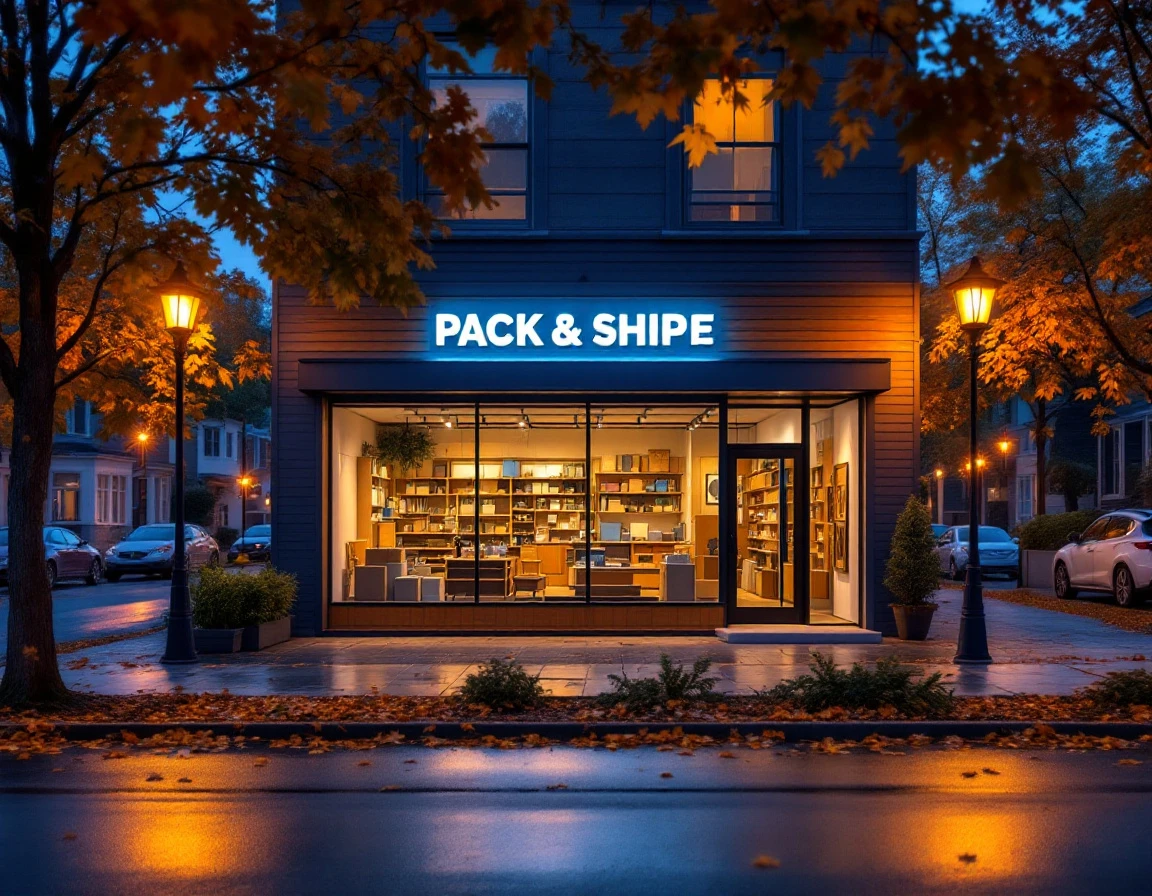
The Local SEO Challenge for Independent Pack and Ship Store Operators
Pack-and-ship store owners compete for local customers in a market where Google Business Profile visibility determines which stores capture walk-in traffic and which remain invisible. Success in local SEO for pack and ship stores depends on consistent visibility in the searches that matter most—the high-intent queries from customers ready to ship a package today.
Pack-and-ship store owners struggle to rank
Independent pack-and-ship stores face an uphill battle when customers search for “shipping near me” or “pack and ship services.” Without consistent, keyword-rich content, your Google Business Profile sits buried beneath national chains that publish regularly and dominate local search results.
Competing against The UPS Store and FedEx Office requires more than competitive pricing. These franchises benefit from corporate SEO resources and national brand recognition.
Local authority signals—like fresh blog content targeting neighborhood search terms—help independent stores claim visibility in map pack results where walk-in customers make their choice.
Google Business Profile ranking and organic search growth
Google rewards stores that publish fresh, relevant content with higher rankings in local search results and improved visibility across Google Business Profile listings. For pack-and-ship stores competing against national franchises, regular blog posts addressing customer questions—dimensional weight calculations, customs form requirements, mailbox rental benefits—signal authority to Google’s algorithm while building organic traffic over time.
Most independent stores can’t afford a full-time content writer. Hiring professional help for even two posts per month often costs more than the incremental revenue those posts generate in their first six months, making it financially impractical for stores operating on retail margins.
How Autonomous Content Generation Builds Local SEO Authority
Google evaluates local business authority through activity signals, and regular blog posts signal that a business is active and authoritative in its market. When a pack-and-ship store publishes consistent content targeting high-intent local searches — ‘USPS shipping near downtown Portland,’ ‘mailbox rental in Queen Anne,’ ‘print services Buckhead’ — each post reinforces the store’s relevance for those keyphrases. Over 60 to 90 days, this pattern compounds: Google begins associating the store with those terms, which improves organic click-through rates when searchers see the business listed.
The connection between blog content and Google Business Profile posts creates a content loop that reinforces local ranking signals. A blog post about ‘how to ship fragile items’ can be excerpted into a GBP update, which links back to the full article. This cross-referencing shows Google that the business maintains active, relevant content across multiple channels. The Google Business Profile posting guide explains how regular updates improve profile visibility in local search results.
Autonomous generation removes the bottleneck. Instead of writing posts manually—a task that often gets postponed during busy weeks—stores can publish two to four keyword-optimized articles per month without hiring a content writer.
This cadence keeps the business visible in Google’s evaluation window, where consistent activity over several months builds cumulative authority that a single burst of content cannot match.
Automated content generation for local SEO makes this rhythm sustainable for independent operators.
Setting Up Your Autonomous Content Calendar
Start by defining four to six topic clusters that align with your store’s core services and your customers’ recurring questions. Pack-and-ship stores typically perform well with clusters around the following areas:
- USPS rate changes
- Mailbox rental strategies
- Packing tips for fragile items
- Seasonal shipping deadlines
Each cluster should target secondary keyphrases your local customers search for—phrases like “how to pack glassware for shipping” or “USPS Priority Mail deadlines for holidays.”
Once you’ve identified your clusters, establish a publishing rhythm of one post every two to three weeks. This cadence is only sustainable with autonomous generation tools that produce keyword-optimized first drafts. Manual writing cannot maintain this schedule without either burning out your team or neglecting other store operations. The tools handle research, structure, and initial drafting, so your role shifts to review and localization.
Before publishing each draft, layer in local details that strengthen your Google Business Profile connection. Insert your store name, city, and neighborhood references where relevant. If a post discusses packing supplies, mention that customers can find bubble wrap and corrugated boxes at your counter. If it covers shipping deadlines, note your store hours during peak season. These localizations signal to Google that your content serves a specific geographic audience.
Schedule posts to go live on the same day and time each cycle—Tuesday mornings or Thursday afternoons work well for business-focused content. Consistency tells Google your site is actively maintained, which compounds your authority over the summer months and positions you to capture search traffic as holiday shipping volume builds in October and November.

Ranking for High-Intent Local Search Queries
Not all search terms deliver walk-in customers. A visitor searching for “shipping options” might be researching carrier services in general, but someone typing “pack and ship near me” or “UPS alternative downtown Portland” is ready to hand you a package today. These high-intent local searches convert at far higher rates because the searcher has immediate need and specific location constraints.
Autonomous content generation becomes powerful when it targets these high-intent keyphrases systematically. Instead of generic shipping advice, you create posts like “Same-Day Pack and Ship Services in Capitol Hill” or “USPS vs UPS Rate Comparison for Seattle Small Businesses” — each addressing a single keyphrase with location modifiers that match how your customers actually search. Google prioritizes freshly published, location-specific content in local 3-pack results, so a steady stream of autonomous posts keeps your Google Business Profile visible during the exact searches that drive foot traffic.
Focus your autonomous generation on keyphrases that signal immediate intent:
- “Mailbox rental 98101”
- “Notary services near Pike Place Market”
- “International shipping forms downtown Seattle”
- “FedEx drop-off Capitol Hill”
Layer in seasonal topics like holiday shipping deadlines. Carrier rate changes in January, and back-to-school packing tips. Each post should weave secondary keyphrases naturally — a post targeting “pack and ship Fremont” might also mention dimensional weight pricing and custom box options without forcing the language.
For deeper strategies on matching content to search intent, explore our mailbox rental SEO guide and local SEO for pack-and-ship stores guide.
Measuring Results in 60–90 Days
After launching autonomous content in June, store owners need a clear measurement framework to quantify local SEO improvements. Google Business Profile Insights provides the first data layer: track post clicks, phone calls, direction requests, and website clicks week-over-week. Compare the 30 days before launching your content calendar against the 30–90 day period after publication begins. You’re looking for upward trends in how customers discover your listing and what actions they take.
Google Search Console reveals the second measurement layer: organic ranking improvements for your target keyphrases. Filter by query to see how phrases like “pack and ship near me [your city]” or “UPS alternative [neighborhood]” climb in average position. Track impressions and clicks for location-specific terms. Rising impressions indicate Google is showing your store more often; rising clicks confirm your content matches searcher intent.
The third metric ties digital visibility to physical foot traffic. Are more walk-in customers mentioning they found you through Google search? Does your POS system data show an uptick in new customer transactions during the same 60–90 day window? This correlation helps you connect search visibility gains to revenue.
Use performance data to refine future autonomous content topics. If “printing services near me” drives more clicks than “mailbox rental,” schedule more printing-related posts. This feedback loop transforms measurement into strategy, continuously improving local SEO performance through data-informed topic selection.
Next Steps: Launch Your Local Blog Content Strategy in June
Starting your autonomous content calendar now gives you a three-month runway to build ranking authority before peak shipping season aarrives in September. The action plan is simple: choose a platform that integrates with local SEO workflows, configure it for pack-and-ship topics, and commit to a publishing cadence that Google rewards.
Begin by selecting an autonomous content generation platform and configuring it for local keyphrases like “pack and ship near me” and “UPS alternative [your city].” Create a content brief template that includes your service focus—whether you emphasize mailbox rentals, notary services, or custom printing—along with brand voice guidelines that reflect how you talk to customers at the counter.
Assign one team member to review generated content on a part-time basis. Their job is to add local details, verify service accuracy, and schedule posts. This isn’t a full-time writer role—it’s a quality-check process that takes 30 minutes per post.
Commit to publishing through August.
By the time holiday shipping volume ramps up in late September, you’ll have built enough Google Business Profile authority to capture local search traffic when it matters most.
This is how independent stores compete locally without hiring dedicated content staff.